

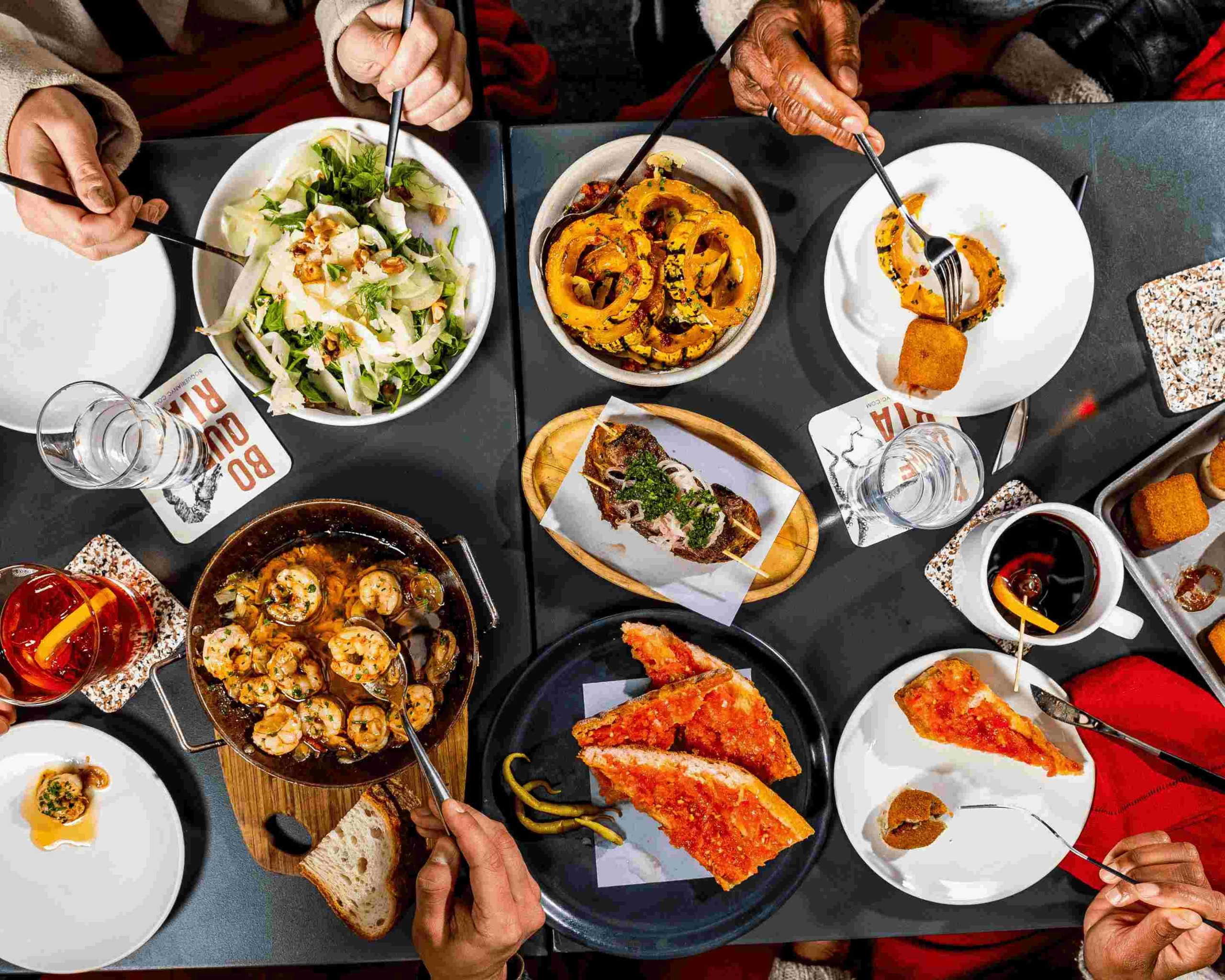
Authentic Spanish tapas is more than small plates on a menu. It’s a way of eating, sharing, and lingering that never quite translates when you shrink it down to a single word on a menu board. A true Spanish tapas experience runs on lively energy, dishes made to be shared, warm hospitality, and a pace that never rushes anyone toward the door.
This piece looks at what actually makes Spanish tapas authentic, why sharing sits at the center of the tradition, how atmosphere and service shape the meal as much as the food does, and what to look for when you’re searching for a Spanish tapas bar that gets the whole thing right.
Key Takeaways
- Authentic Spanish tapas is defined by a full ritual, not just small portions.
- Tapas culture runs on sharing, conversation, and discovery, not individual ordering.
- A lively yet relaxed atmosphere is part of what makes the experience feel real.
- Dishes like patatas bravas, pan con tomate, paella, and sangria anchor the tradition.
- Knowing what to look for helps when you’re searching for authentic Spanish tapas near you.
What Makes Spanish Tapas Authentic
Authenticity in tapas has never come down to portion size. Plenty of restaurants shrink an appetizer, call it a tapa, and miss the point entirely. The real tradition is a full dining ritual: order several dishes, share everything across the table, pair the food with the right drink, and let the meal unfold in rounds instead of courses.
The Meaning Behind Tapas Culture
The word tapa comes from a Spanish habit of covering a glass with a small plate, and the practice grew from there into an entire way of eating: order something, taste it, decide what’s next. Nobody sits down to a fixed sequence of courses. The table builds itself as the night goes.
Why Authentic Spanish Tapas Is About More Than Food
An appetizer exists to set up a main course. A tapa exists on its own, and then another one follows it. That distinction matters more than any single ingredient. The format, the pacing, and the social habit around the table are what make the tradition real, not a specific list of dishes.
How Small Plates Create a Bigger Dining Experience
Small plates add up to something larger than their size suggests. A table that orders six small dishes ends up tasting far more than a table that orders two entrées, and everyone at it walks away with a different favorite. That range is the entire advantage of the format.
The Ritual of Sharing at a Spanish Tapas Bar
Sharing isn’t a nice-to-have at a real tapas bar. It’s the mechanism the whole meal runs on. Dishes arrive to be passed around, not claimed by one person, and the table works through them together.
Why Tapas Are Made for Sharing
Every dish on a proper tapas menu gets sized for passing: a few bites each, not a full portion for one. That sizing is deliberate. It keeps the table reaching, tasting, and reordering instead of settling into one plate and calling it dinner.
Ordering Together, Tasting Together
Nobody orders in isolation at a tapas bar. The table decides as a group, adds a dish when someone spots something at the next table, and keeps the rounds coming until everyone’s had enough. That collective decision-making is part of what makes the meal feel social instead of transactional.
Perfect for Date Nights, Groups, and Celebrations
The format flexes from two people to twelve without changing shape. A couple can share a few plates and a bottle of wine. A birthday table can crowd the middle with paella and a pitcher of sangria. Either way, the ritual holds.
Signature Dishes That Define Authentic Spanish Tapas
A handful of dishes show up again and again at a real Spanish tapas bar, and guests keep coming back for exactly those.
Classic Tapas Guests Keep Coming Back For
Patatas bravas, crisp potatoes under salsa brava and garlic aioli, deliver real heat instead of a suggestion of it. Pan con tomate, toasted bread rubbed with ripe tomato and good olive oil, sets the tone for the rest of the meal. Gambas al ajillo arrive still sizzling in garlic and brandy, and mushroom croquettes crack, then give way to something warm underneath. Bacon-wrapped dates tend to surprise first-time guests the most, sweet up front, salty right behind, and rarely last long on the table.
Paella, Sangria, and the Flavors of Spain
Paella anchors the table when a group is hungry enough to commit to it, arriving in the pan it cooked in with socarrat crackling at the bottom. Sangria fills the same role for drinks, giving the table something to pour from together rather than six separate cocktails moving at six different speeds. Spanish wines round out the table for guests who want something quieter alongside the shared plates.
How Simple Ingredients Become Memorable Dishes
None of these dishes rely on complexity. Good olive oil, ripe tomato, fresh seafood, cured ham: the ingredient list stays short, and the kitchen doesn’t dress anything up past what it needs. That restraint is part of what makes the food feel authentic instead of performative.
Lively Yet Relaxed: The Energy of a True Spanish Tapas Experience
Authenticity doesn’t stop at the menu. It shows up in the room, too. A true Spanish tapas bar feels lively, warm, and social without ever making a guest feel rushed through the meal.
Why Atmosphere Matters in Spanish Dining
A quiet, formal dining room works against everything tapas is built to do. The tradition depends on noise, movement, and a room that stays comfortable at a higher volume than most restaurants aim for. Without that energy, the food can be accurate and the experience still misses the mark.
The Balance Between Energy and Ease
The best version of this balance feels lively without tipping into chaos, and relaxed without going quiet. Conversations overlap. Plates keep moving. Nobody has to raise their voice to be heard, and nobody has to whisper either.
A Place to Linger, Share, and Stay Longer
A real tapas bar never pushes a table through dinner on a schedule. The night has a rhythm instead of a fixed length, and that rhythm bends to the table, not the other way around. That patience, more than any single dish, is what makes the experience feel transportive.
Finding Authentic Spanish Tapas Near You
Not every restaurant with “tapas” on the sign delivers the real version. A few signals help separate the ones that do.
What to Look for in a Tapas Restaurant
Look for a menu built around shareable dishes rather than resized appetizers, traditional flavors that don’t get diluted for a broader audience, and a format that encourages ordering in rounds. A search for authentic spanish tapas, tapas near me, or spanish restaurant near me should turn up places that treat the format as central, not decorative.
Why Service Shapes the Full Experience
Attentive staff make the whole ritual work. A server who can guide a table through a shared menu, pace the rounds, and recommend the right pairing does as much for authenticity as the kitchen does. Service that rushes the table undercuts everything the format is trying to do.
Choosing a Spanish Restaurant That Feels Transportive
The best spots don’t try to recreate Spain exactly. They capture the feeling of it: the noise, the shared plates, the sangria making its way around the table, the sense that nobody’s in a hurry to leave. That feeling is the real marker of an authentic spanish tapas near me search done right.
Conclusion
Authentic Spanish tapas is not a cuisine category. It’s a complete experience built around shared plates, bold flavors, warm hospitality, and lively energy that never turns into chaos. The best tapas restaurants make guests feel transported, not because they copy Spain exactly, but because they capture the spirit of how people eat, drink, and gather there.
Whenever you’re looking to experience it for yourself, seek out a restaurant that brings together food, atmosphere, and service, and lets the whole table share everything in front of them.
Frequently Asked Questions
What is authentic Spanish tapas?
Authentic Spanish tapas refers to a full dining ritual built around ordering several small, shareable dishes throughout a meal rather than a fixed sequence of courses, paired with drinks and a relaxed, social pace.
What are the most popular Spanish tapas dishes?
Patatas bravas, pan con tomate, gambas al ajillo, croquetas, bacon-wrapped dates, and paella are among the most recognized, along with sangria and Spanish wines as the drinks that typically accompany them.
Is tapas meant to be shared?
Yes. Tapas dishes are sized and served specifically for passing around a table rather than for one person, which is central to the format’s social nature.
What should I order at a Spanish tapas restaurant?
Start with something simple like pan con tomate or patatas bravas, then move toward heartier dishes like croquetas or gambas al ajillo, and let paella anchor the table if there’s a group.
How do I find authentic Spanish tapas near me?
Search for authentic spanish tapas or spanish tapas near me and look for a menu built around shareable dishes, traditional flavors, and a lively, unhurried atmosphere rather than a quiet, formal dining room.