

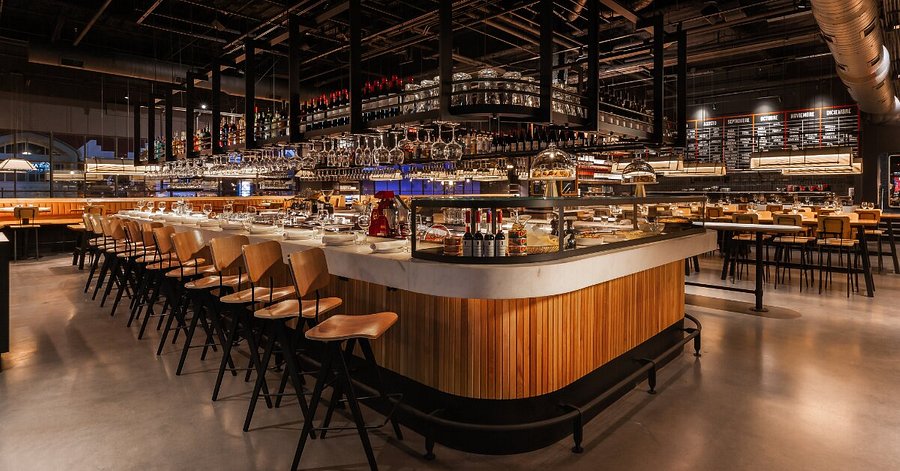
Fifth & Broadway is not a neighborhood built around one kind of plan. It’s a place where locals, visitors, music fans, sports crowds, and late-night wanderers all intersect at the same time. Some people arrive hungry. Others arrive curious. Some want a full dinner, while others are looking for a few bites before the night continues. Dining here rarely starts with agreement—and that’s exactly where Spanish tapas shine.
At Boqueria Fifth & Broadway, Spanish tapas aren’t designed for perfectly planned meals. They’re designed for moments when different expectations meet at the same table. Shared plates allow guests to participate without committing to one fixed idea of what the meal should be. You don’t need consensus to dine well—you just need food that adapts.
When people search for Spanish tapas Fifth & Broadway, they’re often navigating mixed plans and shifting energy. Tapas create common ground. They let groups come together without needing to decide everything upfront, making them a natural fit for one of Nashville’s most dynamic dining corridors.
Key Takeaways
-
Spanish tapas work when dining plans overlap and shift
-
Shared plates reduce friction in high-traffic districts
-
Tapas allow groups with different appetites to dine together
-
Boqueria fits Fifth & Broadway’s unpredictable energy
Fifth & Broadway Is Where Dining Plans Collide
Unlike quieter neighborhoods, Fifth & Broadway is a convergence zone. Visitors exploring the city, locals meeting friends, concertgoers, and sports fans often end up at the same table. Each person arrives with a different timeline and expectation.
Traditional dining struggles in these environments. Entrées require commitment. Courses assume a shared pace. When expectations don’t align, the meal can feel forced or fragmented.
Tapas solve this by removing the need for agreement. Instead of choosing one direction, the table can move in several directions at once. That flexibility allows dining to feel inclusive rather than restrictive, which is exactly what Fifth & Broadway requires.
Spanish Tapas as a Neutral Dining Language
Spanish tapas act as a neutral language at the table. They don’t demand that everyone wants the same thing or the same amount. Shared plates allow guests to participate at their own comfort level.
One person can eat lightly. Another can build a full meal. Someone else can simply snack while enjoying drinks. Everyone remains part of the same experience.
In a high-traffic area like Fifth & Broadway, that neutrality matters. Tapas create balance without compromise, allowing diverse groups to dine together without tension.
When One Table Has Multiple Agendas
At Fifth & Broadway, it’s common for one table to include guests with very different goals. Some want to eat before a show. Others want to drink and socialize. Some are ending their night, while others are just beginning.
Tapas make this coexistence possible. Because dishes are shared and ordered progressively, the table doesn’t need to wait for alignment. The meal adapts as people do.
This flexibility keeps the experience smooth. No one feels rushed, and no one feels left out. Tapas allow the table to function as a whole, even when individual agendas differ.
Tapas as a “Meet-You-Here” Dining Experience
Fifth & Broadway dining often starts with a message like “meet you there.” People arrive at different times, and the group forms gradually.
Tapas support this naturally. Early arrivals can start with a few plates. Later arrivals join in without missing a formal beginning. The meal doesn’t require a reset when someone new arrives.
This approach keeps the energy consistent and removes the awkwardness that can come with staggered seating. The table stays active, welcoming, and fluid.
Table 1: How Spanish Tapas Solve Mixed Dining Expectations at Fifth & Broadway
| Table Dynamic | Tapas Advantage |
|---|---|
| Tourists + locals | Shared discovery |
| Early eaters + late eaters | Flexible ordering |
| Food-focused + drink-focused | Balanced experience |
Spanish Tapas Before Music, Shows, and Events
Fifth & Broadway is surrounded by entertainment. Pre-event dining here needs to be intentional without being time-consuming.
Tapas offer that balance. Plates arrive quickly and can be enjoyed without committing to a long meal. Guests eat well, stay energized, and move on without stress.
Because tapas are shareable and paced by the table, guests don’t feel pressured by the clock. Dining becomes part of the evening’s rhythm rather than a hurdle to clear.
Spanish Tapas After the Event, Not Just Before
After events, the energy shifts. Some guests want to keep the night going. Others want to unwind without restarting the entire evening.
Tapas work in both cases. The same shared plates that support pre-event dining also work for post-event moments. Guests can snack, share, and linger without committing to a full reset.
This adaptability makes tapas especially valuable in a district where the night rarely ends all at once.
How Tapas Keep the Table Social in High-Traffic Areas
High-traffic areas can easily pull attention away from the table. Phones come out. Conversations fragment. Energy dissipates.
Tapas counter this by keeping the table interactive. Plates arrive regularly, prompting shared reactions and conversation. The focus stays on the experience rather than the surroundings.
Shared food becomes a reason to stay engaged. In busy districts like Fifth & Broadway, that engagement is what separates a memorable meal from a forgettable one.
Table 2: Why Spanish Tapas Work Better Than Entrées at Fifth & Broadway
| Entrée Dining | Tapas Dining |
|---|---|
| Individual focus | Group focus |
| Fixed timing | Adaptable pacing |
| Commitment upfront | Ongoing choices |
Drinks, Food, and Balance in a Nightlife Corridor
In nightlife-driven areas, drinks can easily overshadow food. Tapas restore balance by integrating food into the flow of the evening rather than isolating it.
Because plates arrive gradually, guests continue eating alongside drinks instead of before or after them. This pacing keeps energy stable and prevents the night from tipping too far in one direction.
At Fifth & Broadway, where nightlife is part of the draw, tapas help maintain rhythm rather than disrupt it.
Atmosphere That Supports Constant Movement
Tapas thrive in spaces that allow movement and conversation. A room designed for stillness works against shared dining.
At Boqueria Fifth & Broadway, the atmosphere supports constant flow. Guests come and go. Tables expand and contract. The space feels active without becoming overwhelming.
This environment allows tapas to do what they do best—support connection, flexibility, and momentum in a district defined by movement.
Table 3: What Diners Look for in Spanish Tapas at Fifth & Broadway
| Priority | Why It Matters |
|---|---|
| Flexibility | Plans shift quickly |
| Shareability | Mixed groups |
| Social energy | Entertainment setting |
Choosing Spanish Tapas at Fifth & Broadway Without Overplanning
In a convergence district, overplanning works against enjoyment. Guests want dining that fits into their night rather than dictating it.
Spanish tapas succeed here because they remove pressure. There’s no need to decide everything at once. The experience builds naturally as the table evolves.
Guests return to places that feel easy, reliable, and adaptable. That trust is what turns a stop along the way into a place worth revisiting.
Conclusion: Spanish Tapas at Fifth & Broadway Bring Everyone to the Same Table
Spanish tapas at Fifth & Broadway aren’t about commitment—they’re about connection. At Boqueria, we design tapas to meet people where they are, even when those places differ.
Shared plates allow groups with mixed plans to dine together without friction. The experience stays social, flexible, and grounded in the moment.
When people search for Spanish tapas Fifth & Broadway, they’re looking for food that brings everyone to the same table, even when the night is unpredictable. That’s exactly what tapas—and Boqueria—are built to do.
FAQs
Do Spanish tapas work when not everyone wants a full meal?
Yes. Tapas allow guests to participate at different levels without pressure.
Can you order gradually if the group arrives at different times?
Absolutely. Progressive ordering is part of tapas culture.
Are tapas good before and after events?
Yes. Tapas adapt naturally to both moments.
Do tapas work for tourists and locals together?
They do. Shared plates encourage discovery and connection.
Why are shared plates better in entertainment districts?
They keep the table social, flexible, and engaged.