

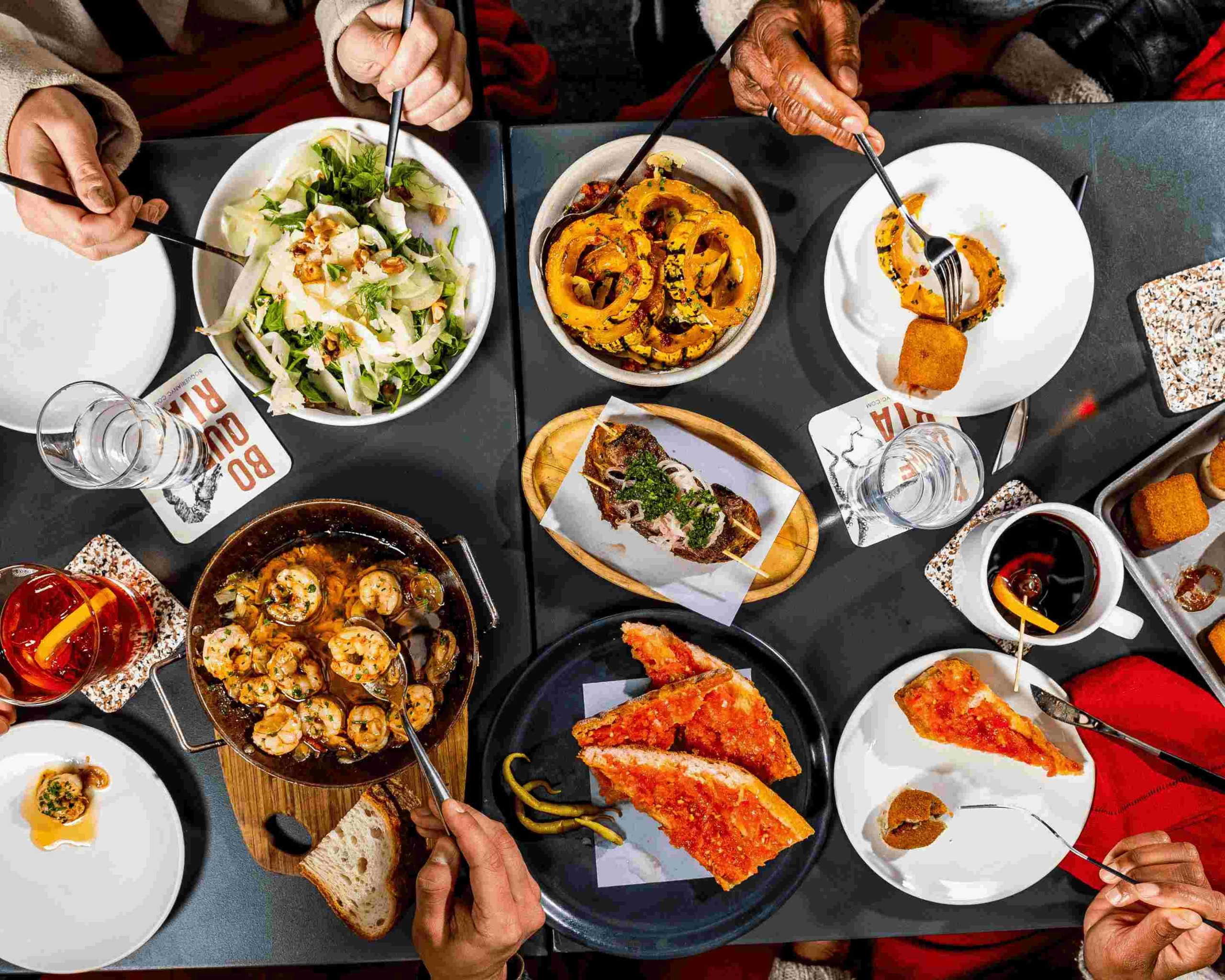
There’s a reason nobody orders one tapa. You could. Technically nothing stops you. But that’s not how this works, and somewhere in the back of your head you already know that.
Spanish tapas are small plates — croquetas, jamón, gambas al ajillo, a tortilla cut into wedges — designed to land in the middle of the table and disappear faster than anyone planned. The concept comes from Spain, where eating has never really been about the individual. It’s about the table. The argument over the last patata brava. The second bottle of wine nobody officially agreed to order.
What Are Spanish Tapas?
The word tapa means “lid” in Spanish — the original version was a slice of bread or cured meat placed over a glass to keep flies out. Somewhere along the way, the lid became the point. By the time the tradition spread from Andalusia north through Madrid and into the Basque Country, tapas had become the organizing principle of Spanish social life: small plates, ordered continuously, eaten standing at a bar or crowded around a table that was never quite big enough.
What separates tapas from appetizers is intent. An appetizer exists to prepare you for a main course. A tapa exists for itself — and then another one does, and then another. There’s no main course waiting. There’s just the table, and whatever you’re all in the mood for next.
Why Tapas Bring People Together
The format does most of the work. When everything lands in the middle, nobody eats alone. You’re negotiating the table in real time — who wants more bread, who’s eyeing the last croqueta, whether to order the octopus or play it safe. It’s a more honest version of a meal than everyone staring at their own plate.
In Spain this isn’t a dining philosophy. It’s just Tuesday. The streets of San Sebastián fill up after work with people moving from bar to bar, one or two plates at each stop, the evening building without anyone deciding to build it. Madrid does the same thing louder. Seville slower. The food changes by region. The instinct doesn’t.
The Rise of Tapas Restaurants and Tapas Bars
A tapas bar is not a restaurant that happens to serve small plates. The atmosphere runs different — noisier, less precious, more willing to let the night go wherever it goes. You sit down without a plan and leave two hours later than you meant to. That’s the experience. The food is the occasion, not the point.
New York took to tapas the way it takes to anything that rewards staying out late and ordering more than you need. The best tapas restaurants in NYC hold the spirit of the thing — the convivial chaos, the plates arriving when they’re ready, the sense that the table is running itself. If you’re searching for tapas near me and the first result looks like it could be any restaurant in any American city, keep looking.
Tapas in Modern Dining
The reason tapas work for brunch, for late nights, for first dates and group dinners and everything in between is the same reason they’ve worked in Spain for centuries: the format fits however many people showed up and however hungry they are. Order two plates or twelve. Stay an hour or four. The table expands to meet the occasion.
Spanish restaurant dining in NYC has never been stronger, and tapas are a big part of why. The small plate format fits the way New Yorkers actually eat — which is to say, indecisively, ambitiously, and usually in groups that grew by two people since the reservation was made.
Finding the Best Tapas Experience
A good tapas restaurant feels lived-in. The menu has anchors — things the kitchen has been making for years and has no intention of changing — alongside whatever came in that morning. The room is loud enough that you’re not performing a conversation. The wine list doesn’t require a guide.
When you’re looking for a tapas bar near me, look for the place that feels like it was there before you arrived and will be there after you leave. The best ones don’t try to explain Spain to you. They just put something good in the middle of the table and let the evening do the rest.
Frequently Asked Questions
- What are Spanish tapas? Small plates meant to be shared — croquetas, jamón, seafood, tortilla española — ordered continuously through a meal rather than in courses.
- Why are tapas served as small plates? Because the point was never the portion. It was always the table.
- What is the difference between a tapas restaurant and a tapas bar? Atmosphere, mostly. A tapas bar tends to be louder, less formal, and more willing to let you stay until closing. A tapas restaurant gives you a little more room. The food overlaps.
- Are tapas meant to be shared? That’s the whole idea.
- How do I find the best tapas near me? Look for the place that has regulars. The menu should have things the kitchen clearly loves making. If everything on the menu sounds like it was designed for a photograph, find somewhere else.