
The bartender is mid-sentence about a Barça match when the gambas al ajillo land on the bar in front of the regulars. Nobody stops talking. The pan still sizzles. Someone tears off a piece of bread without looking down. This is the part of the evening that doesn’t have a name — not quite dinner, not quite drinks, somewhere in the middle where the best nights tend to live.
In Barcelona, the line between drinking and eating dissolved centuries ago, and nobody has missed it. A glass arrives, and a plate follows. The plate empties, and another round gets poured. Nobody planned it that way. Nobody needed to. The drinks and the food in Spain never got separated into two different categories — they grew up together, in the same rooms, at the same bars, ordered in the same breath.
That’s the vibe Boqueria has been trying to build since 2006. Not a restaurant with a bar. Not a bar with food. One room where both run at full strength and neither makes sense without the other.
The Drink Comes First. Then Everything Else.
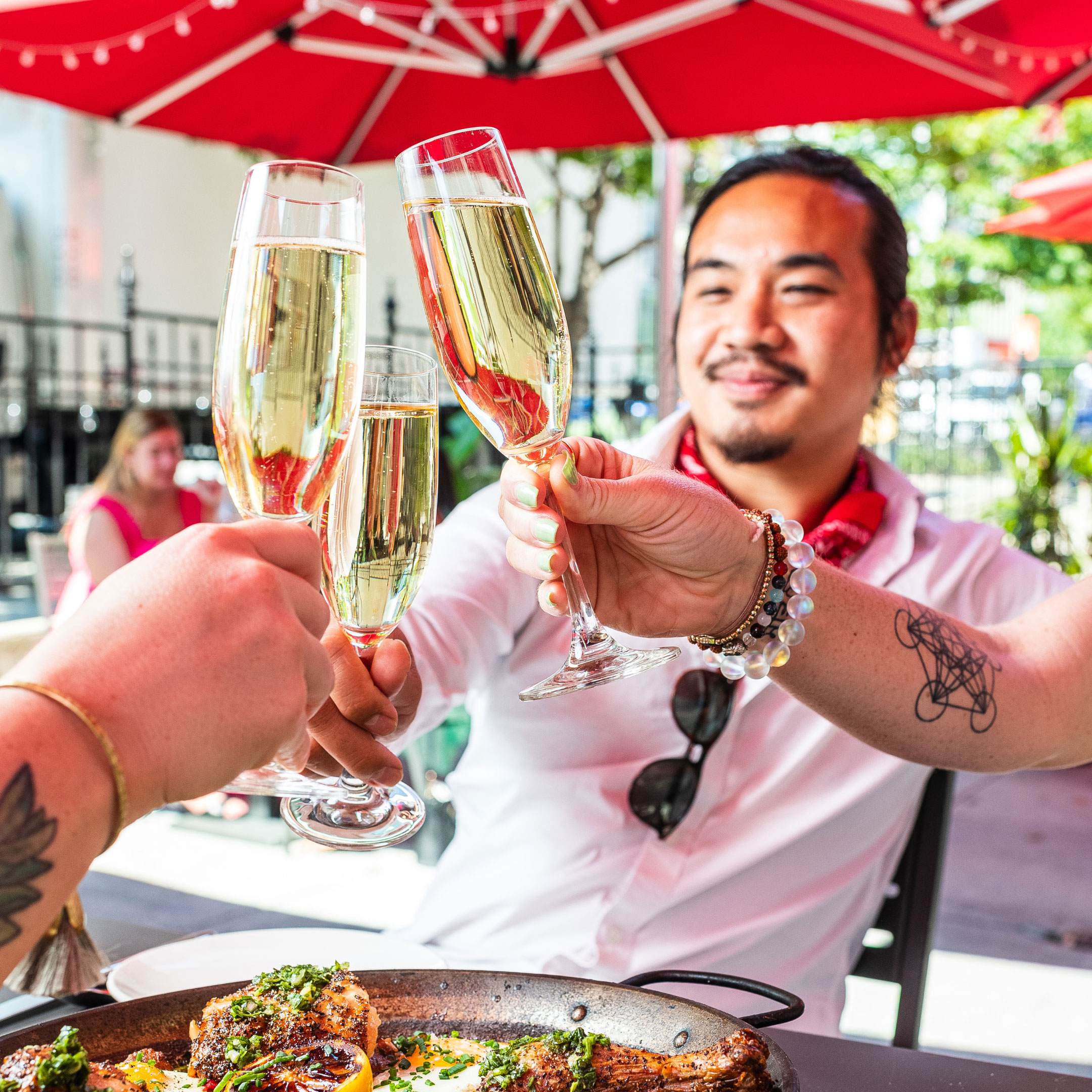
The bar at Boqueria stays full from five o’clock until the kitchen closes. Most nights begin the same way: a Shishito Margarita, or a Negroni, or a pitcher of sangría for the table that just sat down and already knows they’re staying for a while.
The Shishito Margarita became the most-ordered drink at the bar because it earns it — shishito-infused tequila, fresh citrus, a salt rim that doesn’t fight the drink. The Negroni gets the ratio right, which matters more than anything else about a Negroni. The dirty martini, the Cosmopolitan, the Vieux Carré — classics survive because when they are made with care, they never disappoint. It’s easy to find a “cocktail bar near me.” What’s harder to find is a bar that treats every drink on the list as worth getting right.
The sangría comes by the pitcher — red, white, and rosé, all made fresh. The gin tonic gets the Spanish treatment: tall glass, good gin, tonic poured slow, something botanical on top. The wine list reads like a road trip through Spain — txakoli from the Basque Coast, Rioja from the north, Cava for whenever the table tips that direction. For anyone not drinking, the non-alcoholic cocktails get the same attention as the rest of the list. Beer covers whatever’s left.
What Comes Out of the Kitchen
The word tapa means lid. Somewhere in Andalucía, centuries ago, a bartender started covering glasses of wine with small plates to keep the dust out. Small bites of food were placed on the plates. The customers stayed. Over time, the food got more interesting. What started as a practical gesture became a culture, and the culture never stopped — it just moved, city by city, bar by bar, until it landed at Boqueria.
The gambas al ajillo arrive in a pan still spitting — shrimp, garlic, brandy, guindilla pepper in olive oil, the kind of dish you eat faster than you mean to. Patatas bravas come out hot: crispy potatoes, salsa brava, roasted garlic allioli. Croquetas cremosas, mushroom or jamón or both, crunch and give. Dátiles con beicon — dates stuffed with Valdeón blue cheese and almonds, wrapped in bacon — disappear before the next round arrives. Pan con tomate. Pimientos de padrón. Pintxos morunos, seared lamb skewers that hold up against anything on the drink list.
A Negroni and a plate of croquetas. A dirty martini alongside jamón serrano. A pitcher of sangría and whatever the table decides to order next. These combinations don’t require explanation. They explain themselves.
The Room Itself
Tapas work for a first date because the format removes the pressure. Something arrives, gets passed, gets finished. Another plate comes. The conversation has somewhere to land between sentences. The bar at Boqueria runs loud enough to feel alive and close enough to hear the person across from you — that balance is harder to get right than it sounds, and most places don’t bother trying.
For groups, tapas solve the problem that restaurants usually can’t. Nobody agrees on one dish. Here, nobody has to. One table, ten plates, two pitchers of sangría, a round of craft cocktails to start. Happy hour catches the nights that begin before anyone planned them. Brunch runs on weekends, and sangría at noon has Spanish precedent only challenged by an early vermouth on the rocks.
A bar that also feeds you well. A kitchen that keeps the bar honest. Finding both under one roof is rarer than it ought to be.
Boqueria has been on it since the beginning.