
Some date nights feel like interviews.
Boqueria never does.

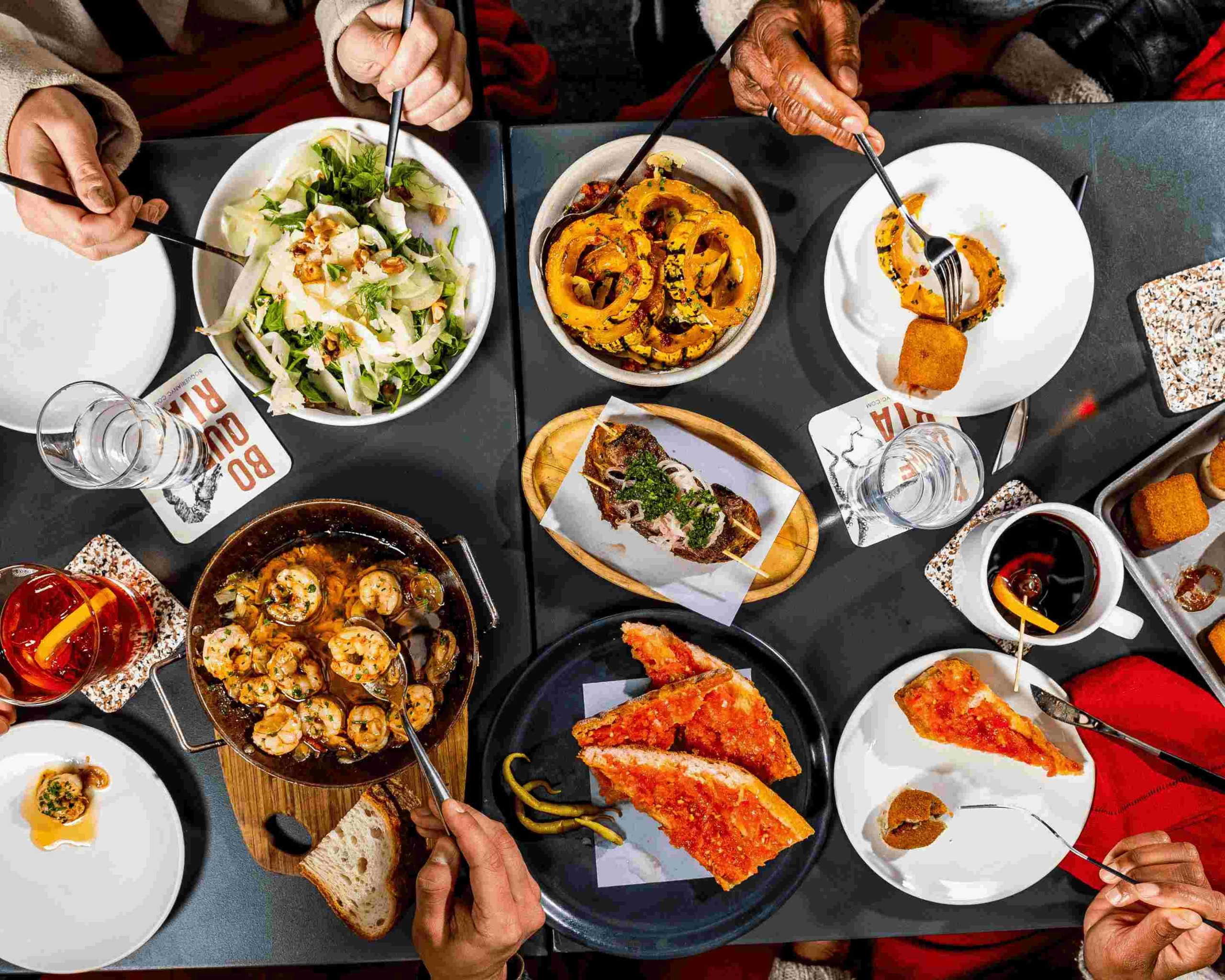
It’s built for conversation — not across a white tablecloth, but across shared plates. There’s something disarming about reaching for the same croqueta. About tearing bread together.
Some date nights feel like interviews.
Boqueria never does.
It’s built for conversation — not across a white tablecloth, but across shared plates. There’s something disarming about reaching for the same croqueta. About tearing bread together.
Tapas are not a course.
They’re not an appetizer.
They’re not a trend.
They’re a way of eating.
In Spain, dinner doesn’t unfold in three acts. It moves sideways. You stand at a bar in San Sebastián.
Dinner, the Boqueria Way
The door opens. The room hums.
Dinner begins the only way it should: with olive oil.
Pan con tomate lands first—warm bread, cut thick, rubbed with garlic, crushed ripe tomato pressed into the crumb.
Some places are hard to plan around.
Boqueria isn’t one of them.
It’s the place you suggest when the group chat stalls.
The place you pick when you want it to feel easy.
The place that somehow fits whatever the night becomes.
Alongside a tortilla at breakfast or croquetas and a glass of vermouth before dinner, Ibérico ham is a quintessentially Spanish food. Whether it be freshly sliced from the deli or packaged from the grocery store, it’s one of the ingredients that transcends the regional differences in Spanish cuisine.